100% Secure & Trusted
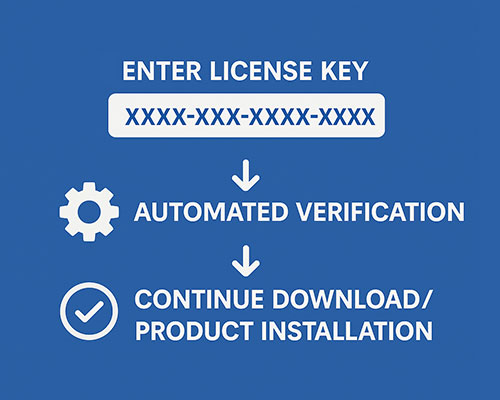
Verify Your Download, Installation or License Key
Verify your product easily and securely for a smooth, worry-free experience. Fast, safe, and designed to protect your purchase.
Renderware Source Code Jun 2026
At the heart of RenderWare lies its source code, a treasure trove of programming expertise and innovative solutions that powered some of the most iconic games of the era. In this article, we'll take a comprehensive look at RenderWare's source code, exploring its architecture, features, and significance in the context of game development.
An RpClump is a collection of atomics and hierarchical frames (like a complete vehicle skeleton).
All platform-specific code (Direct3D 8/9, PS2 GS, GX) lives behind rw::pab interfaces. The source shows how they unified memory management, texture upload, and vertex buffer handling.
Despite its absolute dominance in the sixth console generation, RenderWare quickly faded from the spotlight during the transition to the Xbox 360 and PlayStation 3 era. Two critical shifts led to its obsolescence: renderware source code
The distribution of such proprietary material was not without its risks. The SIGMA Group's distributions came with strict licensing terms that explicitly forbade reverse engineering, decompiling, or disassembling the software to discover its "working procedures, source code, or core algorithms".
The SDK leaks have been a treasure trove for modders. Understanding the .dff (model) and .txd (texture) file formats has allowed for the creation of robust third-party tools. For example, rw-parser is a dedicated tool on GitHub designed to parse RenderWare's proprietary binary stream files, giving modders the ability to import custom models and textures into games that were previously locked behind an opaque and undocumented format.
Higher-level plugins that developers could buy or write. These included rtanim (for bone-based character animation), rtpng (for image loading), and rtworld (for managing massive BSP-based map environments). 2. Grand Theft Auto and the PS2 Bottleneck At the heart of RenderWare lies its source
// Initialize RenderWare Graphics RwCamera *camera; camera = RwCameraCreate(); RwCameraSetViewWindow(camera, 0.0f, 0.0f, 1.0f, 1.0f);
To achieve this, Criterion organized the source code into a strictly layered hierarchy. This prevented high-level game logic from ever communicating directly with the underlying graphics chips, making cross-platform porting remarkably straightforward. The Toolkit Layer (Core & Rt)
While EA never released the source code, portions of RenderWare SDKs (Software Development Kits) have found their way into the public domain through leaks and historical preservation efforts, notably on platforms like the Internet Archive . Key Uses for RenderWare Source Code Today All platform-specific code (Direct3D 8/9, PS2 GS, GX)
The engine organized all assets (textures, 3D models, animation data) into distinct binary chunks. Each chunk contained a header identifying its type and size, allowing the engine to parse assets dynamically without needing monolithic file loaders.
Paper Title: The Architecture of an Era: Analysis and Legacy of the RenderWare 3.x Engine Source Code
The fate of RenderWare changed dramatically in 2004 when Electronic Arts (EA) acquired Criterion Games for $48 million.